Choose timezone
Your profile timezone:
The 5th Workshop on Particle Accelerator Upgrade - Removal and Installation (PAU R&I) will be hosted by Paul Scherrer Institute and held at the Dorint Parkhotel Bad Zurzach in Switzerland.
The series of workshops highlights the strong interest in the technical topics associated with constructing and upgrading particle accelerators. The task incorporates large-scale infrastructures, shielding elements and handling of precision components, such as magnets and delicate vacuum chambers, making the task both complex and highly demanding. It calls for a unique blend of expertise of civil, mechanical, and electrical engineering, as well as expertise in cooling, ventilation, logistics — all this with the understanding of the functionality of particle accelerators to make the dreams of the scientist come alive.
Based on previous workshops, we expect over 50 experts representing accelerator laboratories worldwide. Participants will share experiences of completed and ongoing installations, achievements, and challenges. Laboratories preparing for upcoming accelerator installations and upgrades will present their planning and preparation activities, seeking valuable feedback and collaboration from the international community.
We warmly invite industrial partners to join the workshop and engage with the community. The workshop offers opportunities to display your innovations through exhibition tables and to gain visibility by sponsoring events and workshop materials.
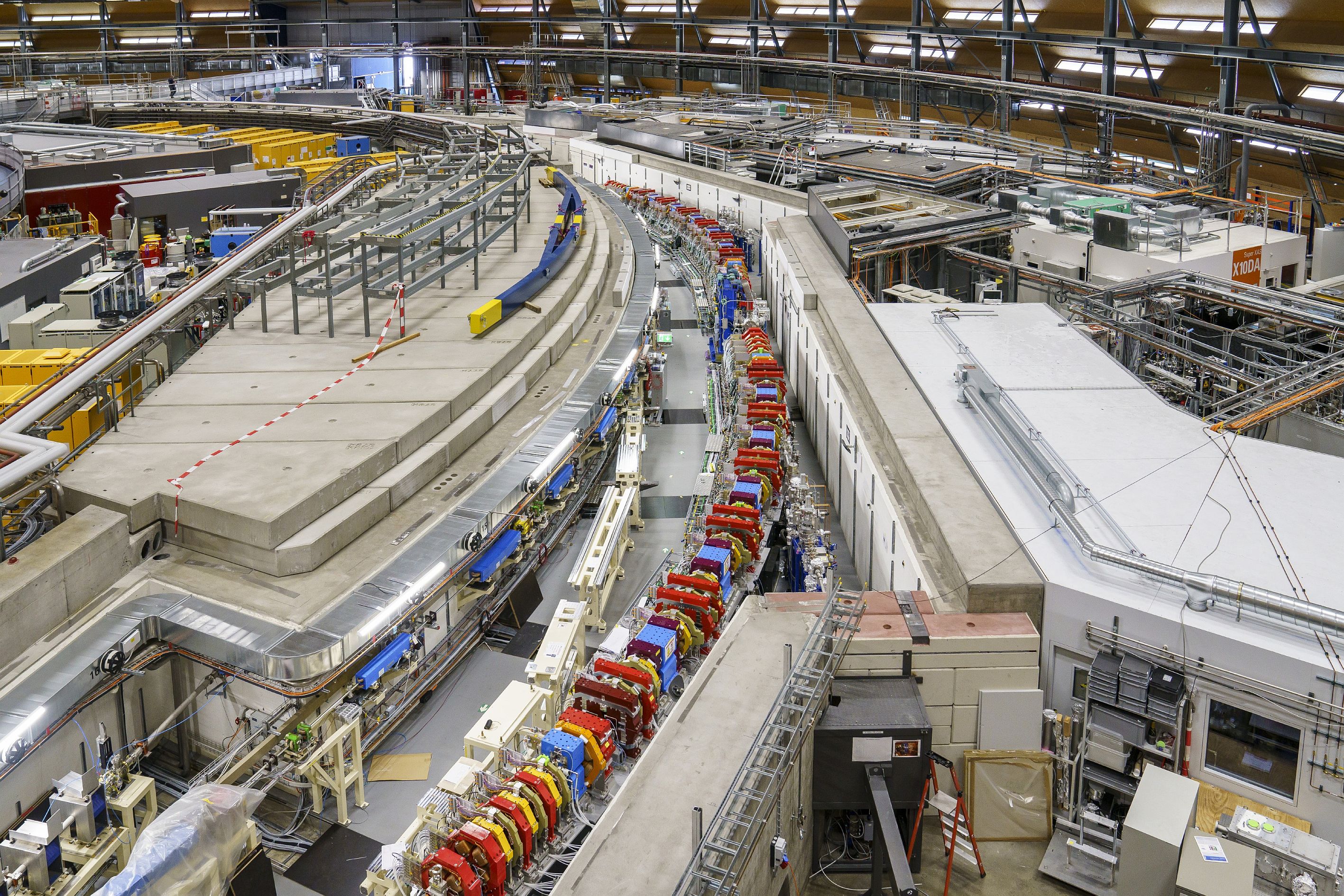
The workshop includes a visit to the Swiss Light Source (SLS) at PSI. The visit will give you a unique opportunity to familiarize yourself with the SLS, one of the recently upgraded 4th generation light sources.
The workshop dinner takes us back to medieval times, where kings and queens ruled, knights protected the land, and walls of stone were built tall on hilltops — taking place at the historical Habsburg Castle.

Elettra 2.0 Project is entered the "Installation Phase" for the Storage Ring. The "Removal Phase" ended in November 2025 following the start of the "Dark Period" on July 2025.
The talk is focused on the many expected and - in some cases - unexpected issues related to the logistics, handling, and planning activities for the removal and the installation of the Storage Ring and the beamline hutches.
The upgrade of synchrotron radiation facilities to diffraction-limited performance imposes stringent requirements on the timely delivery of highly specialized components, often sourced through complex and geographically distributed supply chains. Within the framework of the Elettra 2.0 project, the procurement and industrialization of vacuum chambers—alongside other critical subsystems—have exposed significant challenges related to supplier reliability, manufacturing readiness, and communication effectiveness.
This contribution presents a structured overview of supplier management strategies adopted to mitigate delays and preserve project milestones in a context where late deliveries have become the norm rather than the exception. Particular emphasis is placed on vacuum chamber production, which represents a critical-path supply characterized by tight tolerances, advanced fabrication techniques, and demanding quality assurance protocols. However, the analysis is extended to a broader set of components to highlight recurring patterns across different suppliers and technologies.
The contribution concludes with a set of lessons learned, emphasizing the systemic nature of delays in the current industrial landscape, the critical role of proactive communication, and the necessity of integrating risk-aware procurement practices from early project phases. These findings aim to inform future upgrade projects facing similar constraints and to contribute to a more realistic alignment between project planning and industrial capabilities.
The CERN Neutrons to Gran Sasso (CNGS) facility was installed at CERN in 2002-2005 and operated from 2006-2012, sending a total of 18 E19 400GeV/c protons on target. The high dose rates expected in the target cavern, even years after the end of operation, several beamline elements were designed for remote handling. After installation and before the start of operation, the most critical handling and dismantling procedures were defined, performed on non-radioactive items, and documented to ensure the final dismantling would be “ALARA” concerning Radiation Safety, i.e, make dose to personnel as well as radioactive waste created As Low As Reasonable Achievable. At the end of operation, the CNGS target area was blocked off from the rest of the facility by an airtight shielding wall.
In 2025, to make space for the extension of the proton-driven wakefield acceleration (AWAKE) project, installed just upstream of the shielding wall, the CNGS Target Area Dismantling (CTD) works started. The CNGS target was removed in February 2026, and works will continue until the end of 2026, when the emptied, decontaminated CNGS target area will be handed over to the AWAKE project, allowing the start of the installation of AWAKE’s extended facility.
This paper shows the “ALARA” design and operational decisions made at the start and end of CNGS, and shows how they reduced dose-to-personnel and radioactive waste during the actual dismantling. We show the lessons learnt from the dismantling of CNGS’s most radioactive items, giving useful input to the design of future irradiation facilities and the procedures to dismantle them at end-of-life.
The final phase of the ALS-U Accumulator Ring (AR) installation and integration at Berkeley Lab is underway, with commissioning scheduled to begin in spring 2027. The AR is a new intermediate ring between the injector synchrotron and the upgraded Storage Ring (SR), which will be installed during the upcoming two-year Dark Time (DT) period currently scheduled to start at the end of calendar year 2027. Before the DT, the AR will be commissioned while the existing SR continues to supply x-ray light to users.
The tunnel hardware installation of the AR is mostly complete as of spring 2026, and the electrical pit rack installation and electrical integration is progressing well. As the AR represents the first major installation phase of the ALS-U project, many challenges were encountered and invaluable lessons learned were captured along the way and will be applied during the upcoming removal of the existing SR and installation of the new multibend acromat SR.
In my presentation I will discuss the AR installation methods, the lessons learned from the installation and how they are applied in our preparation for the long DT.
The LCLS-II-HE project is installing a major upgrade to the SLAC linear accelerator facility to greatly increase electron and photon beam energy and repetition rate, pushing the frontiers of X-ray science. The installation phase of the project has many constraints and challenges: limited physical space and access to the accelerator housing, a tight timeline, resource demands from operations and other projects at SLAC, and more. In this talk we present on the project’s approach to foreseeing and preventing conflicts and addressing conflicts as they arise. We also focus on some unique challenges in two areas of installation: the high-power RF (HPRF) system and Cryomodules. Topics for the HPRF system include long-term storage and organization of inventory, specialized tooling, and applications of lessons learned throughout the installation process. Topics for the Cryomodules include best practices for handling large-scale, sensitive equipment in confined spaces; and coordination of multiple specialized groups performing mission-critical installation tasks like UHV Particle Free vacuum connections.
The ALBA II project is a major upgrade of the ALBA Synchrotron aimed at significantly enhancing performance and scientific capabilities. The project is structured into five coordinated programs covering beamline upgrades and new long beamlines, a storage ring upgrade to 4th generation light source, expanded computing and data systems, new infrastructure including buildings and photon transfer lines, and the overall implementation. The upgrade will be executed during a planned 18-month shutdown in 2030–2031.
This presentation describes the general technical and project organization challenges status, with particular focus on implementation aspects such as logistics, removal and installation planning, and coordination across programs. It addresses the definition of storage solutions for new and legacy components, the development of a digital Components Database (CDB) for full traceability, and the planning of transport, tooling, and safety procedures. Waste management strategies and current progress toward operational readiness are also outlined.
Installation Strategy of the Siam Photon Source II Synchrotron Light Source
Siam Photon Source II (SPS-II) is a 4th generation synchrotron light source currently under development in Thailand. Featuring a 3.0 GeV electron beam energy and a 327.6 m circumference, the facility utilizes a Double-Triple Bend Achromat (DTBA) lattice to achieve sub-nanometer natural emittance. The DTBA configuration was specifically selected for its superior "productivity"—optimizing the ratio of straight-section length to total circumference. This 14-cell storage ring provides 14 long and 14 short straight sections, to accommodate insertion devices and essential machine subsystems. The combination of a 270 MeV linear accelerator and a 3.0 GeV concentric booster synchrotron works as the beam injector. Seven Phase-1 photon beamlines will provide users with high-intensity photon beams with energy ranging from 80 eV to 60 keV. The on-girder alignment of the SPS-II storage ring magnets is based on precision mechanical reference surface methodology pioneered by Paul Scherrer Institute (PSI) for the Swiss Light Source (SLS). This presentation details the comprehensive installation roadmap for the SPS-II accelerator, covering mechanical integration, alignment tolerances, and the phased commissioning strategy.
The installation of the National Centre for Synchrotron Radiation SOLARIS (NCPS SOLARIS) in Kraków represents a full green-field implementation of a synchrotron radiation facility, including civil construction, installation of the accelerator complex, and commissioning of the storage ring. This contribution presents a technical retrospective of the installation phase from the perspective of installation engineering, infrastructure integration, and logistics of large-scale accelerator components.
The presentation focuses on the installation workflow of the accelerator systems, including transport and handling of heavy and high-precision components, installation sequencing, mechanical positioning, and alignment of accelerator elements under strict tolerance requirements. Particular attention is given to the interface between civil engineering works and accelerator installation, including floor stability, vibration constraints, integration of cable trays and utilities, and coordination of installation activities within limited spatial and logistical constraints.
The contribution also discusses the integration of technical infrastructure required for accelerator operation, including cooling water systems, electrical distribution, ventilation, vacuum infrastructure, and control system cabling. Emphasis is placed on practical challenges related to installation tolerances, installation planning, risk mitigation, and coordination between multiple contractors and engineering teams during the installation phase.
In addition, the presentation provides a retrospective analysis of the later expansion of the facility building, carried out to enable the construction of additional experimental beamlines. The experience gained during the initial installation phase is analyzed in the context of subsequent infrastructure modifications, highlighting lessons learned in installation planning, layout flexibility, and long-term infrastructure strategy.
Several years after the completion of the project, this contribution summarizes the installation process from an engineering perspective and presents practical lessons relevant to ongoing and future accelerator installation and upgrade projects, particularly in the context of installation logistics, alignment strategy, and multidisciplinary engineering coordination.
The Elettra 2.0 project schedule set tight deadlines in a fast paced technical environment. In this framework, expertise, teamwork and method must be merged all togheter in order to ensure the effectiveness of every installation phase and to guarantee the safety of the operations. Contractors with different levels of specialization are also involed, making the technical coordination challenging.
Every assembly of the storage ring is subjected to a deep analysis in terms of installation. All the technical informations are collected in the form of a detailed sequence of activities, with focus on responsabilities and critical control points. If needed, specific tools and instructions are developed in cooperation with the owner of the system to be installed. Analyzing the details of the assembly sequences is also possible to prevent risks and to improve the safety of the operations.
The first storage ring installation phase is running and the case study of the girder bases is presented. The operations include civil works, precision mechanics and granites, involving internal stakeholders and contractors. This gave the chance to debug drawings and documents. Strenghts and weaknesses of the procedures are reported.
The LBNL ALS-U project is delivering major facility upgrades to install a new Accumulator Ring (AR) and Storage Ring (SR), requiring cable plant infrastructure to support approximately 10,000 cables in a highly congested and space-constrained environment. This work demands strong coordination between design, AHJ compliance, and field execution to ensure constructability and schedule performance.
This presentation will summarize cable plant design and installation progress, key challenges, lessons learned, and the execution strategy moving forward. It will highlight early AR challenges including long AHJ approval timelines, labor-intensive design development, evolving subsystem inputs, and limited field condition integration that impacted installation readiness.
The presentation will also cover the revised SR approach, including engagement of an experienced A&E firm, transition to Revit-based design for improved BIM coordination, finalized subsystem cable requirements, and incorporation of 30% spare tray capacity. It will further discuss internal BIM modeling efforts to support clash detection and validate subcontractor deliverables.
Finally, the presentation will review installation progress, the use of prototype installation to improve efficiency, and the addition of subcontracted installation resources to accelerate execution and strengthen readiness for SR delivery.
The development of a long-term 2.0 K testing capabilities at Brookhaven National Laboratory (BNL) is essential for the Electron-Ion Collider (EIC). Since the Superconducting Radio Frequency (SRF) cryomodules will be built at Jefferson Lab in Virginia and transported to BNL, a critical need exists for testing at BNL before their installation in the EIC accelerator complex. Testing the cryomodules at full power after transport is necessary to ensure that delicate components, such as high-power couplers, beam line absorbers, tuners, and cryogenic lines, remain undamaged. If such issues are discovered post-installation, the removal and repair process could require an extended shutdown of the accelerator, as well as complex removal and installation of the surrounding equipment. In addition, with the RHIC Removal and Repurpose (R&R), we will be repurposing some large and heavy equipment from RHIC for the test facility, e.g. PHENIX cooling tower, CeC Cryo compressors and vacuum skids. This presentation will cover the modifications required to our decommissioned Energy Recovery Linac (ERL) accelerator blockhouse, laser room, and the support facilities, the removal of decommissioned equipment from RHIC and the ERL blockhouse, the installation of the new equipment for the test facility upgrade and the installation plan of the 591MHz SRF cryomodules in the EIC accelerator. .
Designing large-scale facilities is inherently multidisciplinary, requiring close collaboration between industrial and civil design domains to ensure structural integrity and system integration. In civil engineering, best practices increasingly rely on Building Information Modeling (BIM), a digital methodology that enables the creation and management of structured, information-rich 3D models throughout the lifecycle of a project. Effective design processes depend on coordinated, bidirectional data exchange among disciplines. While transferring data from BIM to CAD environments is generally straightforward, the reverse process remains challenging due to fundamental differences in design logic and data structure.
This work proposes a framework to adapt industrial CAD design logic to BIM-oriented workflows. The methodology is structured in four key steps: identification of fundamental nodes, removal of non-essential small components, geometry simplification, and integration of product data. To evaluate the approach, a web-based application was developed to support and partially automate the proposed workflow.
As part of the Physics Beyond Colliders study, CERN will repurpose an underground experimental area (ECN3) in the North Area to explore physics beyond the Standard Model through a new beam dump facility to house the Search for Hidden Particles (SHiP) experiment. The High Intensity ECN3 project aims to upgrade the current infrastructure and implement the systems required to deliver beam to the SHiP experiment. To achieve this purpose, the dismantling of the existing beam line, target, and the NA62 experiment is necessary. The project also involves constructing a new service building, a new target station, a new beam line, and adapting the existing services to meet modern standards and the specific needs of SHiP. To know more about the project don’t hesitate to consult the project website: https://hiecn3.web.cern.ch/
During the Upgrade, Removal and Installation it is very important to have a centralized database for the data on hardware (HW) components, such as, locations, system names, cable numbers, hostnames, MAC addresses and relations between various HW components and several user groups. The centralized database is also used for HW planning and life cycle management, and tracks the history of every part which is helpful for Commissioning. At PSI we are using such a database with a Web-interface called Inventory. The goal of the HW-database is to be the central entry point for different User groups, technicians, scientists and people of interest. Ease of handling supports users and integrators in their daily work. This PSI made Inventory is a cheap Solution, with high functionality and efficient adaptability with new functions.
The CIRI infrared line is the first beamline designed at NCPS Solaris. This presented many challenges during the design phase. Furthermore, the very limited space available to accommodate five vacuum chambers proved to be a significant challenge.
The European Synchrotron Radiation Facility – Extremely Brilliant Source (ESRF-EBS) upgrade has enabled users, since August 25, 2020, to benefit from the first high-energy fourth-generation storage ring light source. For cost and scheduling considerations, the booster injector was refurbished rather than upgraded. However, the long-term ESRF strategy envisions an upgrade of the injector complex to a full-energy 6 GeV linear accelerator (linac). Such a linac must be accommodated within the ESRF site, imposing a maximum footprint of approximately 145 m. To meet this constraint, high-gradient accelerating structure technology developed at SLAC has been selected as a key enabling solution for achieving a compact design. The implementation of a photoelectron gun is expected to deliver a beam with a reduced six-dimensional phase space at extraction, while the adoption of a pulse compression scheme to power the SLAC-type structures offers significant cost reduction. This poster presents the Cool Copper Operation Linac Demonstrator (COLD) project, recently initiated at ESRF. The project aims to develop a pre-injector linac and to validate the critical technologies required for a high-gradient, cost-effective 6 GeV linac.
After a brief recall on buildings and infrastructure required for SOLEIL upgrade, so-called SOLEIL II, a presentation will focus on the scenario and methodology of girders assembly, and the following strategy for a shutdown will be developed. We will review scheduled scenario and phasing based on a series of opening and closing of slabs per areas. During the major shutdown phase, girders installation followed by a first-alignment campaign allowing achromat vacuum chamber installation, then straight sections and front-ends, will be illustrated with synoptic and installation diagrams.
NSLS-II has been in user operations since 2015, following accelerator installation from 2011 until 2014. The build-out of experimental beamlines is roughly 50% complete with multiple beamline construction projects in process. In addition, projects to increase reliability, add redundancy, and address obsolescence are underway. Initial plans for a full upgrade to NSLS-II are also proceeding through development projects and prototyping. In this presentation, I will give an overview of the multiple projects in process and plans for a future upgrade to NSLS-II-U.
The ALS-U project is nearing completion of the installation of the accumulator ring and focusing efforts on starting construction and ultimately installing the storage ring. This presentation will outline the engineering workflows and processes developed to support the complex logistics and configuration management challenges of a large-scale projects. Specifically, we will use the ALS upgrade project as a case study to demonstrate how Berkeley Lab is leveraging the Product Lifecycle Management tool Windchill and other integrated database systems to connect design, fabrication, assembly, installation, calibration, testing, and quality control processes, thereby establishing a comprehensive framework with a centralized repository that will enable a smooth transition of the new facility into commissioning and will ultimately support its next science operation phase.
The High-Luminosity Large Hadron Collider (HL-LHC) project involves a major upgrade of the cryogenic infrastructure supplying helium to the final focusing regions of the ATLAS and CMS experiments. The integration of new superconducting components requires the complete removal of the existing cryogenic systems installed in the long straight sections at Points 1 and 5, covering a total length of approximately 640 m. This operation includes dismantling the LHC cryogenic distribution line (QRL), which entails cutting 70 fully welded interconnections within the confined geometry of the LHC tunnel and in a radiologically activated environment.
This presentation describes the principal technical and organizational challenges of the intervention, which will take place during Long Shutdown 3 (LS3) of the accelerator complex at CERN. It covers the development and qualification of specialized tooling to ensure safe dismantling under radiation exposure and strict spatial constraints, as well as the planning and coordination activities required to execute the project efficiently and safely.
Thispresentation will describe the planning and execution of the LCLS-II-HE long downtime scope for the cable plant and controls/safety systems. Topics will include the safe removal of a portion of the existing facility’s commissioned cable plant (electronics racks, cable trays, and cables); cable plant inventory management, storage and staging; inspections and QA/QC processes; as well as cable termination and testing. In addition, aspects of the LDT installation that affect the configuration of credited safety systems will be outlined, specifically the radiation safety systems and oxygen deficiency hazards. Lessons learned from each of these areas will be presented, as will a look forward to the remainder of the installation plan.
This presentation outlines the System Installation and Final Integration (SIFI) scope supporting the Accelerator Storage Rings (ASR) Subproject. The focus is on the installation and integration of Electron and Hadron Storage Ring systems within the existing 3.8 km beam line tunnel and the new and existing service buildings at Brookhaven National Laboratory.
The talk details installation responsibilities across major technical systems, including normal and superconducting magnet assemblies, snake magnets, vacuum systems, RF and SRF systems, cryogenic distribution (2K and 4K), instrumentation, power supplies, and associated electronics.
Key dependencies, such as RHIC Removal & Repurposing activities, new and existing service building readiness, utility availability, and CD-3A cryogenic deliverables, are discussed. The presentation also highlights bottom-up Basis of Estimate (BOE) development, installation sequencing, safety and work control processes, and configuration management practices.
PSI Accelerators Overview
The goal of IMPACT project (Isotope and Muon Production using Advanced Cyclotron
and Target technologies) is the construction of two new target stations and beamlines
at the high-intensity proton accelerator HIPA. The project consists of two subprojects HIMB
and TATTOOS. This presentation will focus exclusively on the HIMB subproject.
The pre-phase of the HIMB project has already started with various preparation works and the main upgrade works will take place in 2028–2030. The aim of HIMB is to upgrade the existing muon target at HIPA, which will lead to an increase of the available muon rate by up to a factor 100.
From the technical point of view, reaching this objective requires significant dismantling and installation work. This demands careful and detailed planning in advance. In my talk, I will present the planning approach and give an overview of the dismantling and assembly activities, highlighting some specific technical topics and challenges.
The Los Alamos Neutron Science Center (LANSCE) is located at Technical Area 53 (TA-53) at Los Alamos National Laboratory in Los Alamos, New Mexico. LANSCE is driven by an 800 mega electron volt (MeV) proton accelerator that delivered first beam in 1972. The LANSCE accelerator is unique in that it accelerates both H- (to full energy of 800 MeV) and H+ ions (up to 100 MeV currently but has accelerated high-power H+ beam to 800 MeV in the past) and supports five separate experimental areas that operate simultaneously with each having different timing and beam current requirements. Many of the LANSCE accelerator front end components date back to its original commissioning in 1972, including the ion sources, Cockcroft-Walton (CW) generators, and the Drift Tube LINAC (DTL) which accelerates the beam up to 100 MeV.
The purpose of the LANSCE Accelerator Modernization Project (LAMP) is to replace and modernize multiple accelerator systems and components to improve beam delivery, reliability and availability. LAMP modernization will improve system maintainability and prepare the facility for operation through 2050. The scope currently includes modernizing the two ion sources, replacing the two CW generators with a modern Radio Frequency Quadrupole (RFQ), and replacing the 60-meter-long DTL which is exhibiting severe degradation and has significantly exceeded its expected lifespan. Modernization of accelerator systems beyond the 100 MeV beam energy are not within the currently approved scope of LAMP, however, start-to-end modeling through the entire accelerator including the Proton Storage Ring (PSR) will need to be performed to verify the project’s performance requirements will be met for all five experimental areas.
LAMP is executed as a congressional line-item project under DOE Order 413.3b for the National Nuclear Security Agency (NNSA). The design will follow the Program Requirements Document (PRD) for LAMP and other requirements that flow down from the PRD. The project successfully completed a conceptual design review (CDR, 30% design maturity) in October 2025 and is on a path towards the DOE Critical Decision (CD) 1. Removal and installation are planned to start in 2031 and span over a period of 18 months.
Waste beam from the Spallation Neutron Source’s (SNS) injection process is steered to the Ring Injection Dump (RID). The history of the design and installation of the RID is convoluted and included late design changes requiring post-installation machining. In 2023, the RID proton beam window and beamstop were replaced, in part to support the installation of the RID Imaging System, which required a luminescent coating on the RID proton beam window. The replacement activities experienced numerous complications due to damage from corrosion but ultimately concluded with a successful vacuum leak check. Since resuming operations in summer 2023, a leak has developed at the RID window, which is being mitigated until the window can be replaced again and the sealing surface damage addressed (currently anticipated to occur in Summer 2027). This presentation will discuss the complexity of the RID, the impacts of the helium leak, the various mitigation approaches implemented, and remaining mitigation possibilities.
The Advanced Light Source Upgrade (ALS-U) at Lawrence Berkeley National Lab (LBNL) will replace the existing storage ring (SR) while leveraging much of the current ALS infrastructure and experimental systems. The new SR will use powerful, compact magnets arranged in a dense, circular array called a multi‑bend achromat lattice. The SR removal and installation (R&I) work will occur during an approximately 21- to 22-month-long shutdown period known as Dark Time (DT), currently scheduled to start near the end of 2027. A multitude of other projects will also occur during this same time period, all of which are necessary in order to commission the new accelerator. These projects include the seismic retrofit of the facility, upgrades to lead and concrete shielding, relocation and reconfiguration of many front ends, and upgrades to the SR AC power distribution. The LBNL R&I team acts as the general contractor and manages space utilization, logistics, and schedule time frames across all of these projects.
A key component of DT planning is LBNL's integrated supplemental DT schedule. This technically-driven schedule captures critical dependencies across all work performed in DT in order to define the time frames and boundary conditions for each subcontractor. In my presentation I will discuss R&I’s overall plan for Dark Time, including how all of the projects interface with one another, as well as key challenges and the mitigation strategies developed to address them.
Draft: Decommissioning, Girder Assembly and Storage
Mick will explain the 3 key challenges encountered whilst implementing a logistics strategy to support the upgrade project, namely control of space, inventory data and organisational behaviour.
The solutions devised to overcome these challenges will be described and evaluated.