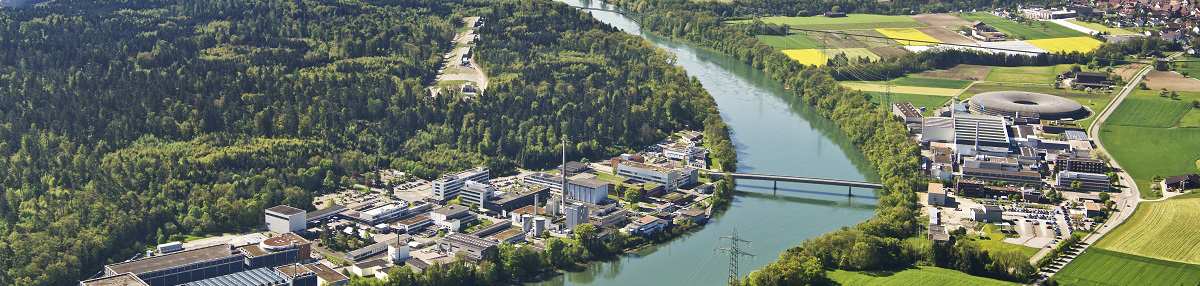
Description
Center for Proton Therapy at Paul Scherrer Institut
-
Mr Nicolas LOIZEAU (Department of Physics, University of Zürich, Switzerland)22/11/2019, 13:15Oral
Introduction: Although rapidly growing, proton therapy is a limited resource, which is not available to all the patients who may benefit from it. In this study, we investigate if combined proton-photon treatments, in which some fractions are delivered with protons and the rest with photons, improve on single-modality treatments. Combined treatment can be motivated by the consideration that,...
Go to contribution page -
Hannes LÖBNER (Division of Medical Radiation Physics and Department of Radiation Oncology, Inselspital, Bern University Hospital and University of Bern, Switzerland)22/11/2019, 13:30Oral
Introduction
Go to contribution page
Recent research has shown the feasibility to combine the respective dosimetric advantages of photon and electron beams to achieve superior treatment plan quality (mixed beam radiotherapy MBRT) in comparison to pure photon therapy. Tumor treatment with proton beams on the other hand has distinct benefits in terms of reduced integral dose to a patient compared to photon beams. The... -
Carla WINTERHALTER (1 Division of Cancer Sciences, University of Manchester, M13 9PL, Manchester, UK; 2 The Christie NHS Foundation Trust, M20 4BX, Manchester, UK)22/11/2019, 13:45Oral
Introduction: The Christie NHS Foundation Trust began treating patients using proton therapy in Dec. 2018. As part of the current patient specific quality assurance, each proton field is delivered to a SolidWater (SW) phantom (1 hour for preparation/analysis per patient plus 2 hours of beam time per plan). Monte Carlo (MC) based independent dose calculations have been proposed to reduce...
Go to contribution page -
Ms Miriam KRIEGER (PSI)22/11/2019, 14:00Oral
Introduction: Motion management is crucial when applying scanned proton therapy to lung tumours. In order to mitigate
Go to contribution page
the detrimental motion effects, it is important to know the deformable motion of the patient’s lungs during
treatment. To date, no real-time 3D imaging modality is available, which is why a surrogate for the motion
is needed. This study investigates the predictive power of... -
Ms Lena NENOFF (Paul Scherrer Institute, Center for Proton Therapy, Switzerland; Department of Physics, ETH Zurich, Switzerland)22/11/2019, 14:15Oral
Introduction: With proton therapy, high dose conformity to the target can be achieved while sparing normal tissues, which makes it especially suitable for non-small cell lung cancer (NSCLC) patients. On the other hand, the proton dose is sensitive to density changes in the beam path and the anatomy of NSCLC patients often changes between fractions (fast tumor growth/shrinkage, weight...
Go to contribution page